
C'è un bar qui vicino?
Is there a bar nearby?
IPA /ˈtʃɛ um ˈbar kwi viˈtʃino/
Say it cheh oon BAR KWEE vee-CHEE-noh
Listen in Italian:
Slow in Italian:
C'è un bar qui vicino?
Describe places with c'è and ci sono, say what there is and is not, talk about frequency, and make adjectives agree with colours.
Say these aloud before you start. They come from earlier lessons.
To say 'there is', Italian uses c'è (there is): C'è un bar qui. To say 'there are', use ci sono: Ci sono due ristoranti. Think of them as one fixed phrase — you do not translate 'there' word by word.
Negation is easy: non c'è (there is not), non ci sono (there are not). This pattern describes rooms, streets, towns and even people: Non c'è nessuno (there is nobody).
These small words handle quantity and existence: tutto (everything), qualcosa (something), niente (nothing). With niente, Italian still uses the negative: Non ho niente (I have nothing).
For people: tutti (everyone), qualcuno (someone), nessuno (nobody) — again with a negative verb: Non vedo nessuno (I see nobody).
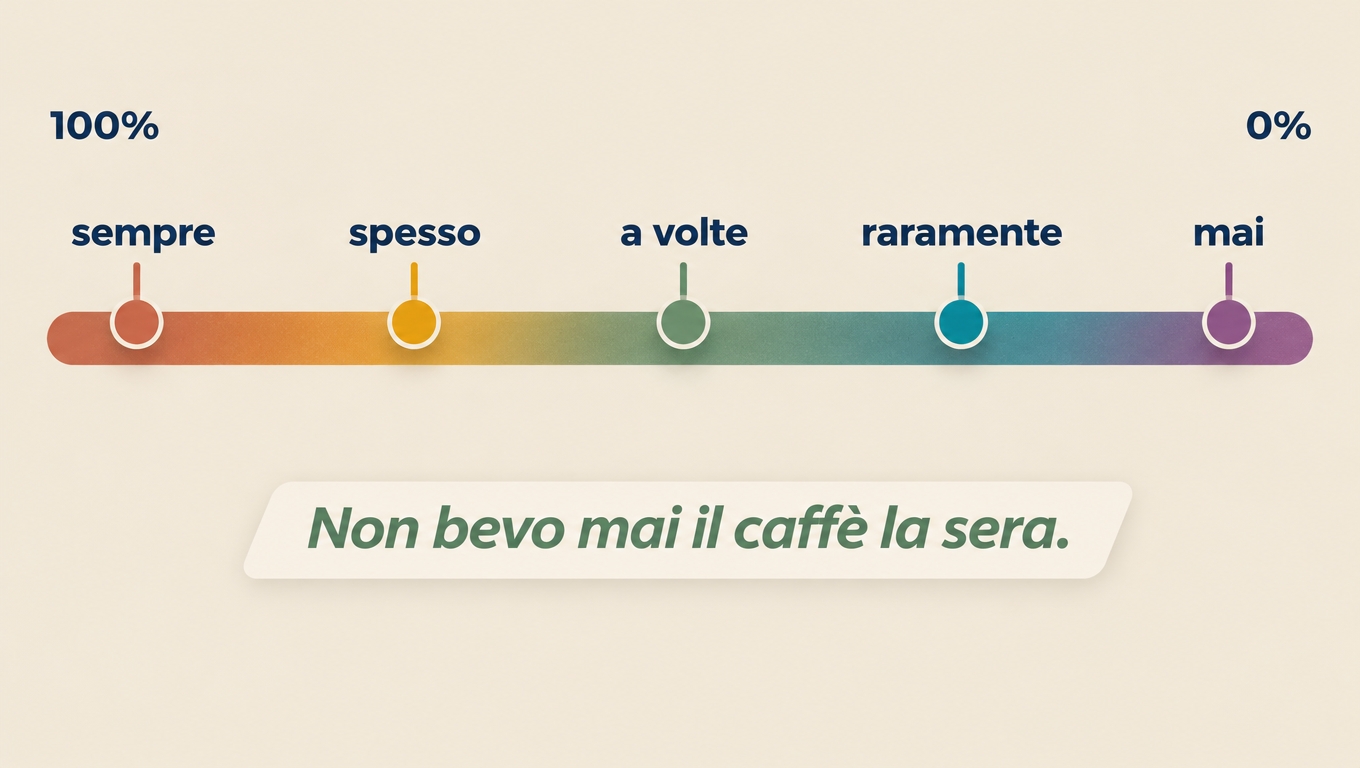
Four words cover most frequency talk: sempre (always), spesso (often), a volte (sometimes), mai (never). They usually sit right after the verb: Vado spesso al cinema.
Mai needs a negative verb, exactly like niente and nessuno: Non vado mai in palestra (I never go to the gym).
Adjectives change their ending to match the noun: -o for masculine singular, -a for feminine singular, -i for masculine plural, -e for feminine plural. Un bar piccolo, una casa piccola, due bar piccoli, due case piccole.
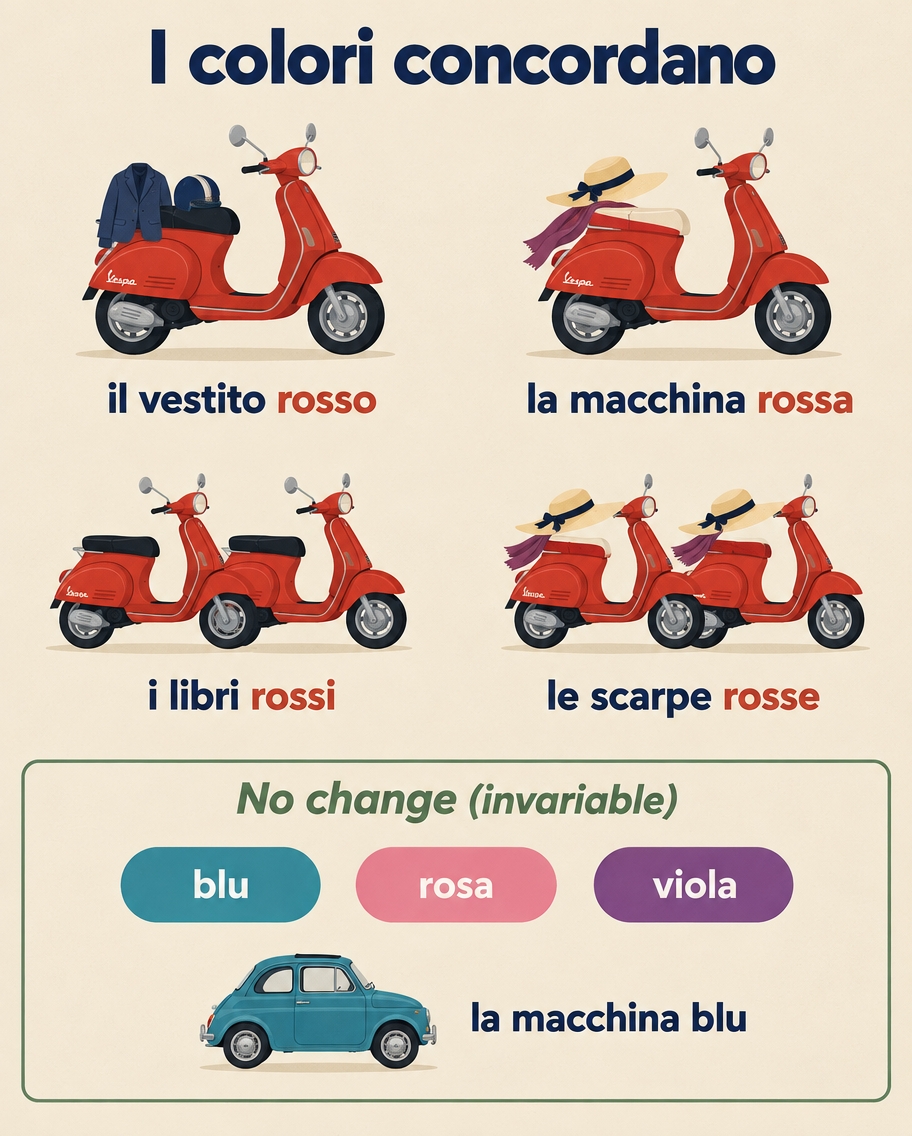
Colours behave like other adjectives, with two wrinkles. blu never changes: il cielo blu, le case blu. verde is invariable in the singular — il libro verde, la mela verde — but takes -i in the plural: i libri verdi, le mele verdi. rosso follows the noun fully: una macchina rossa.
| Form | singular | plural |
|---|---|---|
| positive | C'è un bar. | Ci sono due bar. |
| negative | Non c'è pane. | Non ci sono panini. |
| question | C'è un bagno? | Ci sono camere libere? |
One fixed phrase each — c'è for one, ci sono for more than one.
| Form | masculine | feminine |
|---|---|---|
| singular | il bar rosso | la macchina rossa |
| plural | i bar rossi | le macchine rosse |
rosso follows -o/-a/-i/-e. blu never changes. verde: verde (singular) → verdi (plural).
| Italian | English | Pronunciation | Audio |
|---|---|---|---|
| c'è | there is | /ˈtʃɛ/ cheh | Listen in Italian: Slow in Italian: c'è |
| ci sono | there are | /tʃi ˈsono/ chee SOH-noh | Listen in Italian: Slow in Italian: ci sono |
| tutto | everything; all | /ˈtutto/ TOOT-toh | Listen in Italian: Slow in Italian: tutto |
| qualcosa | something | /kwalˈkɔza/ kwahl-KOH-zah | Listen in Italian: Slow in Italian: qualcosa |
| niente | nothing | /ˈnjɛnte/ NYEHN-teh | Listen in Italian: Slow in Italian: niente |
| qualcuno | someone | /kwalˈkuno/ kwahl-KOO-noh | Listen in Italian: Slow in Italian: qualcuno |
| nessuno | nobody, no one | /nesˈsuno/ nehs-SOO-noh | Listen in Italian: Slow in Italian: nessuno |
| sempre | always | /ˈsɛmpre/ SEHM-preh | Listen in Italian: Slow in Italian: sempre |
| spesso | often | /ˈspɛsso/ SPEHS-soh | Listen in Italian: Slow in Italian: spesso |
| a volte | sometimes | /a ˈvɔlte/ ah VOHL-teh | Listen in Italian: Slow in Italian: a volte |
| mai | ever; never (with non) | /ˈmai/ MYE | Listen in Italian: Slow in Italian: mai |
| rosso | red | /ˈrosso/ ROHS-soh | Listen in Italian: Slow in Italian: rosso |
| verde | green | /ˈverde/ VEHR-deh | Listen in Italian: Slow in Italian: verde |
| blu | blue | /ˈblu/ BLOO | Listen in Italian: Slow in Italian: blu |
| nero | black | /ˈnero/ NEH-roh | Listen in Italian: Slow in Italian: nero |
| bianco | white | /ˈbjaŋko/ BYAHN-koh | Listen in Italian: Slow in Italian: bianco |
| giallo | yellow | /ˈdʒallo/ JAHL-loh | Listen in Italian: Slow in Italian: giallo |
| la stanza | room | /ˈstantsa/ STAHN-tsah | Listen in Italian: Slow in Italian: la stanza |
| la via | street | /ˈvia/ VEE-ah | Listen in Italian: Slow in Italian: la via |
| la città | the city, the town | /la tʃitˈta/ lah cheet-TAH | Listen in Italian: Slow in Italian: la città |
| la cucina | kitchen; cuisine | /kuˈtʃina/ koo-CHEE-nah | Listen in Italian: Slow in Italian: la cucina |
| il bagno | bathroom | /ˈbaɲɲo/ BAHN-yoh | Listen in Italian: Slow in Italian: il bagno |
| il letto | the bed | /il ˈlɛtto/ eel LEHT-toh | Listen in Italian: Slow in Italian: il letto |
| il tavolo | table | /ˈtavolo/ TAH-voh-loh | Listen in Italian: Slow in Italian: il tavolo |
| la finestra | the window | /la fiˈnɛstra/ lah fee-NEH-strah | Listen in Italian: Slow in Italian: la finestra |
| la porta | the door | /la ˈporta/ lah POHR-tah | Listen in Italian: Slow in Italian: la porta |
C'è un bar qui vicino?
Is there a bar nearby?
IPA /ˈtʃɛ um ˈbar kwi viˈtʃino/
Say it cheh oon BAR KWEE vee-CHEE-noh
Ci sono due ristoranti in questa via.
There are two restaurants on this street.
IPA /tʃi ˈsono ˈdue ristoˈranti in ˈkwesta ˈvia/
Say it chee SOH-noh DOO-eh rees-toh-RAHN-tee in KWEH-stah VEE-ah
Non c'è pane.
There is no bread.
IPA /non ˈtʃɛ ˈpane/
Say it nohn cheh PAH-neh
Non c'è nessuno a casa.
There is nobody at home.
IPA /non ˈtʃɛ nesˈsuno a ˈkasa/
Say it nohn cheh nehs-SOO-noh ah KAH-zah
C'è qualcuno qui?
Is there anyone here?
IPA /ˈtʃɛ kwalˈkuno ˈkwi/
Say it cheh kwahl-KOO-noh KWEE
Ho tutto ciò che serve.
I have everything I need.
IPA /o ˈtutto tʃɔ ke ˈserve/
Say it oh TOOT-toh choh keh SEHR-veh
Voglio mangiare qualcosa.
I want to eat something.
IPA /ˈvɔʎʎo manˈdʒare kwalˈkɔza/
Say it VOH-lyoh mahn-JAH-reh kwahl-KOH-zah
Non ho niente da fare.
I have nothing to do.
IPA /non o ˈnjɛnte da ˈfare/
Say it nohn oh NYEHN-teh dah FAH-reh
Double negative is normal: non + niente.
Leggo sempre la sera.
I always read in the evening.
IPA /ˈlɛɡɡo ˈsɛmpre la ˈsera/
Say it LEH-goh SEHM-preh lah SEH-rah
Vado spesso al cinema.
I often go to the cinema.
IPA /ˈvado ˈspɛsso al ˈtʃinema/
Say it VAH-doh SPEHS-soh ahl CHEE-neh-mah
al = a + il.
A volte lavoro da casa.
Sometimes I work from home.
IPA /a ˈvɔlte laˈvoro da ˈkasa/
Say it ah VOHL-teh lah-VOH-roh dah KAH-zah
Non guardo mai la televisione.
I never watch television.
IPA /non ˈɡwardo mai la televiˈzjone/
Say it nohn GWAHR-doh MY lah teh-leh-vee-ZYOH-neh
mai needs non: non ... mai.
La mia macchina è rossa.
My car is red.
IPA /la ˈmia ˈmakkina ɛ ˈrossa/
Say it lah MEE-ah MAHK-kee-nah eh ROHS-sah
Il cielo è blu oggi.
The sky is blue today.
IPA /il ˈtʃɛlo ɛ ˈblu ˈɔddʒi/
Say it eel CHYEH-loh eh BLOO OH-jee
blu never changes.
La casa è piccola ma bella.
The house is small but beautiful.
IPA /la ˈkasa ɛ ˈpikkola ma ˈbɛlla/
Say it lah KAH-zah eh PEEK-koh-lah mah BEHL-lah
piccola and bella agree with casa.
In cucina c'è un tavolo bianco.
In the kitchen there is a white table.
IPA /in kuˈtʃina ˈtʃɛ um ˈtavolo ˈbjaŋko/
Say it in koo-CHEE-nah cheh oon TAH-voh-loh BYAHN-koh
Quanti anni hai? Ho vent'anni.
How old are you? I am twenty.
IPA /ˈkwanti ˈanni ai o venˈtanni/
Say it KWAHN-tee AH-nee eye oh vehn-TAHN-nee
C'è un problema con la porta.
There is a problem with the door.
IPA /ˈtʃɛ um proˈblɛma kon la ˈpɔrta/
Say it cheh oon proh-BLEH-mah kohn lah POR-tah
il problema — masculine despite the -a ending.
Qui non c'è nessun problema.
There is no problem here.
IPA /ˈkwi non ˈtʃɛ nesˈsum proˈblɛma/
Say it KWEE nohn cheh nehs-SOOM proh-BLEH-mah
nessun before a masculine noun.
Ci sono molte cose da vedere.
There are many things to see.
IPA /tʃi ˈsono ˈmolte ˈkɔze da veˈdere/
Say it chee SOH-noh MOHL-teh KOH-zeh dah veh-DEH-reh
Tom asks about the neighbourhood.
Scusa, c'è un bar qui vicino?
Excuse me, is there a bar nearby?
Listen in Italian: Slow in Italian: Scusa, c'è un bar qui vicino?Sì, in questa via. Ci sono due bar.
Yes, on this street. There are two bars.
Listen in Italian: Slow in Italian: Sì, in questa via. Ci sono due bar.E c'è un ristorante italiano?
And is there an Italian restaurant?
Listen in Italian: Slow in Italian: E c'è un ristorante italiano?Non qui. Ma c'è una pizzeria molto buona.
Not here. But there is a very good pizzeria.
Listen in Italian: Slow in Italian: Non qui. Ma c'è una pizzeria molto buona.Perfetto! È aperta sempre?
Perfect! Is it always open?
Listen in Italian: Slow in Italian: Perfetto! È aperta sempre?A volte chiude il lunedì.
Sometimes it closes on Mondays.
Listen in Italian: Slow in Italian: A volte chiude il lunedì.Sara shows her flat to a friend on video call.
Questa è la mia nuova casa!
This is my new home!
Listen in Italian: Slow in Italian: Questa è la mia nuova casa!È bella! Che stanze ci sono?
It is beautiful! Which rooms are there?
Listen in Italian: Slow in Italian: È bella! Che stanze ci sono?C'è una grande cucina e due camere.
There is a big kitchen and two bedrooms.
Listen in Italian: Slow in Italian: C'è una grande cucina e due camere.E il bagno?
And the bathroom?
Listen in Italian: Slow in Italian: E il bagno?C'è anche il bagno, con una finestra piccola.
There is also the bathroom, with a small window.
Listen in Italian: Slow in Italian: C'è anche il bagno, con una finestra piccola.C'è un problema?
Is there a problem?
Listen in Italian: Slow in Italian: C'è un problema?No, non c'è nessun problema. Mi piace molto!
No, there is no problem at all. I love it!
Listen in Italian: Slow in Italian: No, non c'è nessun problema. Mi piace molto!Choose the correct expression.
Choose the correct expression.
Fill the gap.
Fill the gap with the correct word.
Fill the gap with the correct word.
Choose the correct adverb.
Choose the correct adverb.
Translate into Italian.
Translate into Italian. (many = molti)
Translate into Italian.
Translate into Italian.
Translate into English.
Translate into English.
Choose the correct form of rosso.
Choose the correct form of bianco.
Tap the words in the correct order.
Tap an adverb, then its English.
Tap a colour, then its Italian word.
True or false?
True or false?
Play the audio, then type exactly what you hear.
Play the audio, then pick the sentence.
Rewrite with sempre.
Say the sentence aloud, then reveal and rate yourself.
Say the sentence aloud, then reveal and rate yourself.
Describe your kitchen aloud using c'è/ci sono, then your street, then say three true sentences about how often you do everyday things.
Before you move on, make sure you can do all of this without looking:
Go deeper: c'è and ci sono · Adjective agreement · Negation · Articles