
Quanti anni hai?
How old are you?
IPA /ˈkwanti ˈanni ˈai/
Say it KWAHN-tee AH-nee eye
Italian says 'how many years do you have'.
Listen in Italian:
Slow in Italian:
Quanti anni hai?
Talk about your family, say what belongs to you, tell the time and move between yesterday, today and tomorrow — including your first -ere and -ire past tenses.
Say these aloud before you start. They come from earlier lessons.
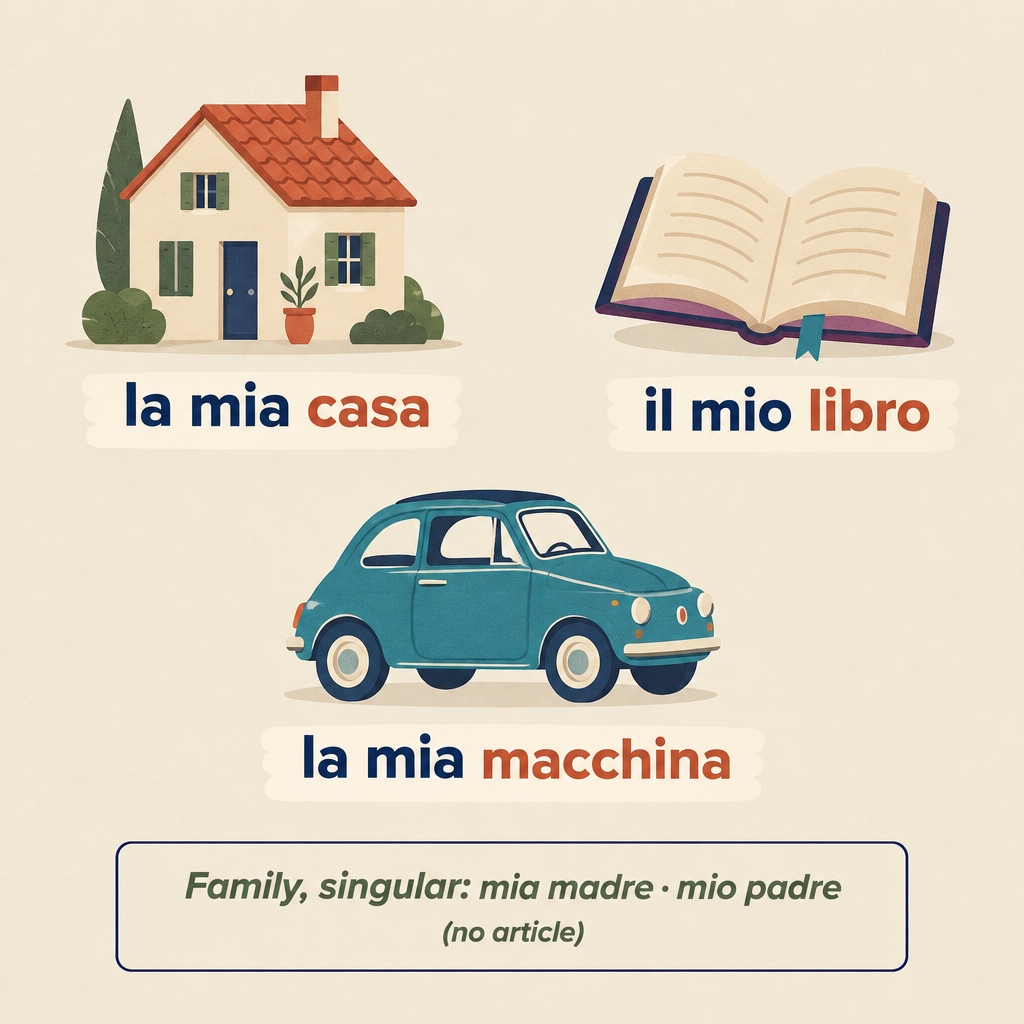
Italian possessive adjectives keep their definite article: il mio libro (my book), la mia casa (my house), i miei libri, le mie case. The article changes with the noun's gender and number, not with the owner.
The owner only changes the adjective itself: mio (my), tuo (your), suo (his/her), nostro (our), vostro (your), loro (their). Suo can mean his, her or formal your — context decides.
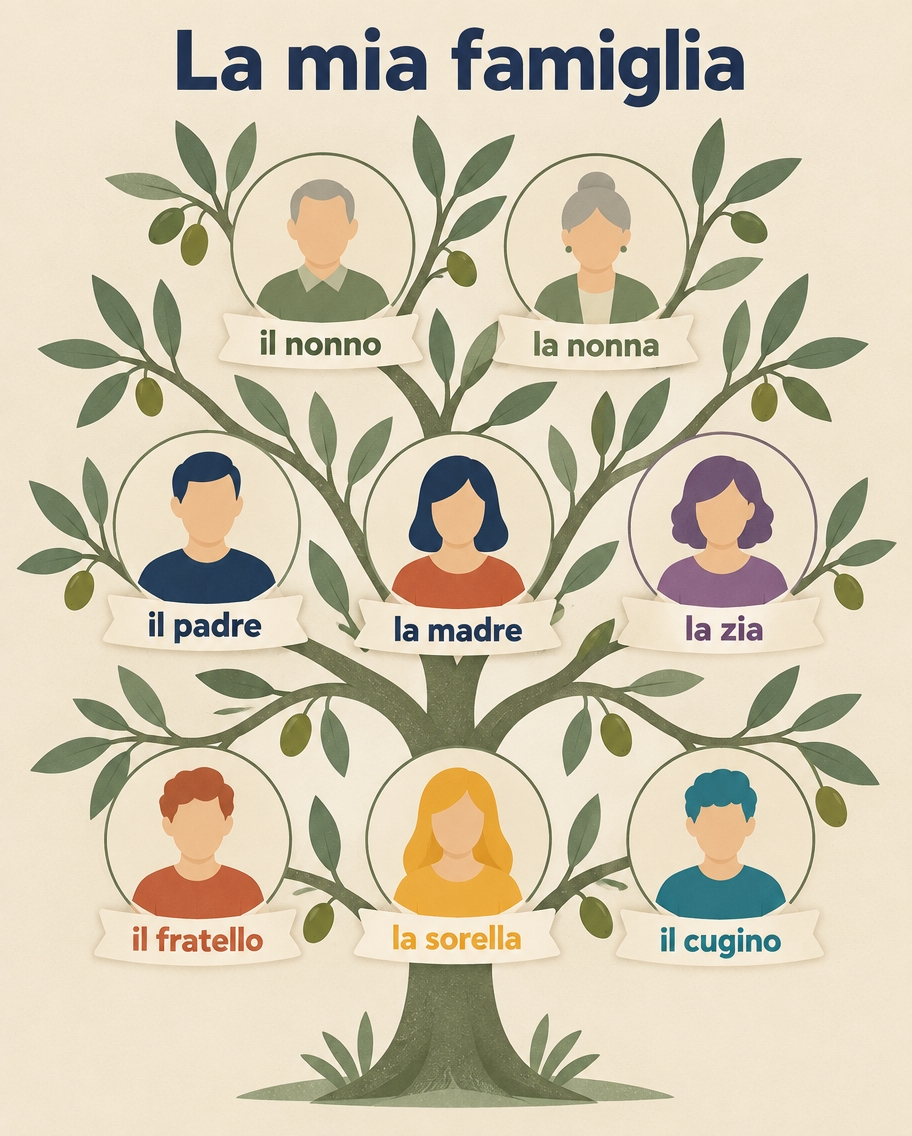
One famous exception: family members in the singular drop the article — mia madre (my mother), mio padre (my father), but i miei genitori (plural keeps the article).
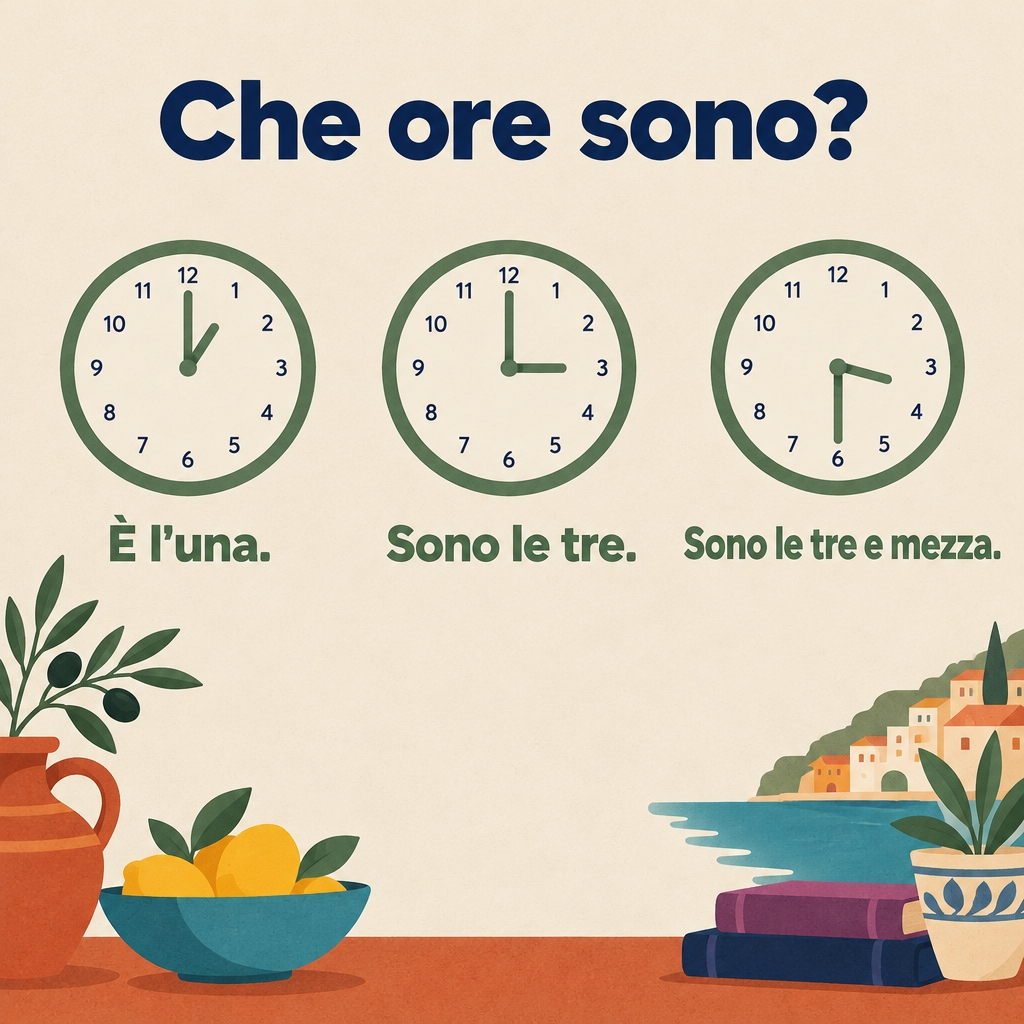
Ask Che ore sono? (What time is it?) and answer Sono le tre (It is three o'clock). For one o'clock only, the verb is singular: È l'una (It is one).
Half hours: Sono le tre e mezzo (3:30). Quarter hours: e un quarto (quarter past), meno un quarto (quarter to). Minutes: Sono le due e dieci (2:10).
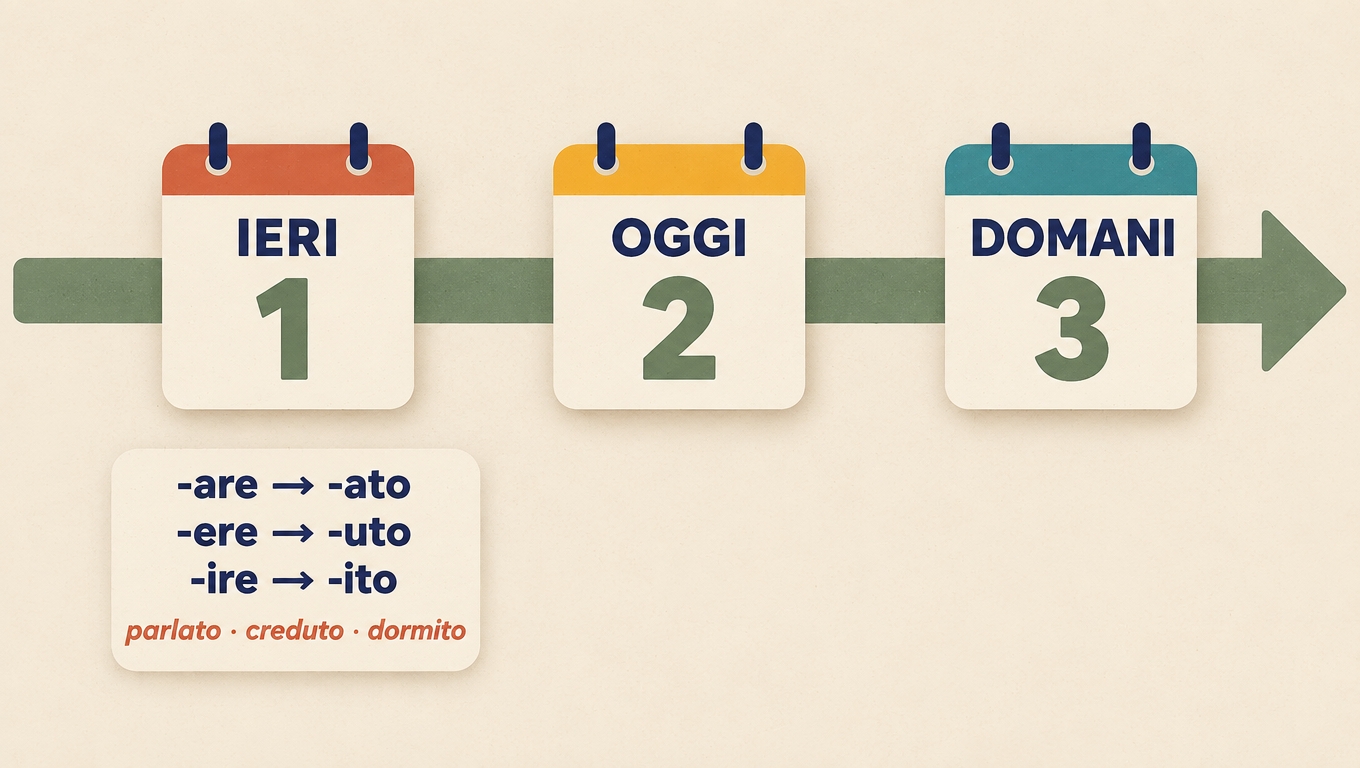
The passato prossimo needs a past participle. Regular verbs: -are → -ato (parlare → parlato), -ere → -uto (vendere → venduto), -ire → -ito (dormire → dormito).
Keep the participle attached to ho/hai/ha... and you can already describe yesterday: Ieri ho lavorato. Ieri ho venduto la macchina. Ieri ho dormito bene.
Four time words organise your story: ieri (yesterday), oggi (today), domani (tomorrow), adesso (now). Italian uses them with the present or passato prossimo — the future form comes in Lesson 14, but domani works fine with the present for plans.
Numbers are the backbone of time: uno, due, tre, quattro, cinque, sei, sette, otto, nove, dieci, undici, dodici, then venti (20), trenta (30), cento (100).
| Form | masculine singular | feminine singular | masculine plural | feminine plural |
|---|---|---|---|---|
| mio | il mio libro | la mia casa | i miei libri | le mie case |
| tuo | il tuo libro | la tua casa | i tuoi libri | le tue case |
| suo | il suo libro | la sua casa | i suoi libri | le sue case |
| nostro | il nostro libro | la nostra casa | i nostri libri | le nostre case |
| loro | il loro libro | la loro casa | i loro libri | le loro case |
The article follows the noun; the adjective follows the owner. Singular family members drop the article: mia madre.
| Form | infinitive | participle |
|---|---|---|
| -are | parlare | parlato |
| -ere | vendere | venduto |
| -ire | dormire | dormito |
ho + participle: Ho parlato, ho venduto, ho dormito.
| Italian | English | Pronunciation | Audio |
|---|---|---|---|
| la famiglia | family | /faˈmiʎʎa/ fah-MEE-lyah | Listen in Italian: Slow in Italian: la famiglia |
| il padre | father | /ˈpadre/ PAH-dreh | Listen in Italian: Slow in Italian: il padre |
| la madre | mother | /ˈmadre/ MAH-dreh | Listen in Italian: Slow in Italian: la madre |
| il fratello | brother | /fraˈtɛllo/ frah-TEHL-loh | Listen in Italian: Slow in Italian: il fratello |
| la sorella | sister | /soˈrɛlla/ soh-REHL-lah | Listen in Italian: Slow in Italian: la sorella |
| il figlio | son | /ˈfiʎʎo/ FEE-lyoh | Listen in Italian: Slow in Italian: il figlio |
| la figlia | daughter | /ˈfiʎʎa/ FEE-lyah | Listen in Italian: Slow in Italian: la figlia |
| i genitori | parents | /dʒeniˈtori/ jeh-nee-TOH-ree | Listen in Italian: Slow in Italian: i genitori |
| la nonna | grandmother | /ˈnɔnna/ NOHN-nah | Listen in Italian: Slow in Italian: la nonna |
| il nonno | grandfather | /ˈnɔnno/ NOHN-noh | Listen in Italian: Slow in Italian: il nonno |
| l'orologio | clock, watch | /oroˈlɔdʒo/ oh-roh-LOH-joh | Listen in Italian: Slow in Italian: l'orologio |
| l'ora | hour, time | /ˈora/ OH-rah | Listen in Italian: Slow in Italian: l'ora |
| il mezzogiorno | noon, midday | /mɛddzoˈdʒorno/ mehd-zoh-JOR-noh | Listen in Italian: Slow in Italian: il mezzogiorno |
| la mezzanotte | midnight | /mɛddzaˈnɔtte/ mehd-zah-NOHT-teh | Listen in Italian: Slow in Italian: la mezzanotte |
| ieri | yesterday | /ˈjɛri/ YEH-ree | Listen in Italian: Slow in Italian: ieri |
| domani | tomorrow | /doˈmani/ doh-MAH-nee | Listen in Italian: Slow in Italian: domani |
| vendere | to sell | /ˈvendere/ VEHN-deh-reh | Listen in Italian: Slow in Italian: vendere |
| riposare | to rest | /ripoˈzare/ ree-poh-ZAH-reh | Listen in Italian: Slow in Italian: riposare |
| chiamare | to call | /kjaˈmare/ kyah-MAH-reh | Listen in Italian: Slow in Italian: chiamare |
| la macchina | car | /ˈmakkina/ MAHK-kee-nah | Listen in Italian: Slow in Italian: la macchina |
| la casa | house, home | /ˈkasa/ KAH-zah | Listen in Italian: Slow in Italian: la casa |
| il mese | month | /ˈmese/ MEH-zeh | Listen in Italian: Slow in Italian: il mese |
| l'anno | year | /ˈanno/ AHN-noh | Listen in Italian: Slow in Italian: l'anno |
| la settimana | week | /settiˈmana/ seht-tee-MAH-nah | Listen in Italian: Slow in Italian: la settimana |
| il numero | number | /ˈnumero/ NOO-meh-roh | Listen in Italian: Slow in Italian: il numero |
Quanti anni hai?
How old are you?
IPA /ˈkwanti ˈanni ˈai/
Say it KWAHN-tee AH-nee eye
Italian says 'how many years do you have'.
Ho trent'anni.
I am thirty years old.
IPA /o trenˈtanni/
Say it oh trehn-TAHN-nee
avere + age, never essere.
Questa è la mia famiglia.
This is my family.
IPA /ˈkwesta ɛ la ˈmia famiˈʎʎa/
Say it KWEH-stah eh lah MEE-ah fah-MEE-lyah
Mio padre è un insegnante.
My father is a teacher.
IPA /ˈmio ˈpadre ɛ un inseɲˈɲante/
Say it MEE-oh PAH-dreh eh oon een-sehn-YAHN-teh
mio padre — no article for singular family members.
Mia madre lavora a casa.
My mother works at home.
IPA /ˈmia ˈmadre laˈvora a ˈkasa/
Say it MEE-ah MAH-dreh lah-VOH-rah ah KAH-zah
Ho due fratelli e una sorella.
I have two brothers and one sister.
IPA /o ˈdue fraˈtɛlli e ˈuna soˈrɛlla/
Say it oh DOO-eh frah-TEHL-lee eh OO-nah soh-REHL-lah
Il mio libro è sul tavolo.
My book is on the table.
IPA /il ˈmio ˈlibro ɛ sul ˈtavolo/
Say it eel MEE-oh LEE-broh eh sool TAH-voh-loh
sul = su + il.
Che ore sono?
What time is it?
IPA /ke ˈore ˈsono/
Say it keh OH-reh SOH-noh
Sono le tre.
It is three o'clock.
IPA /ˈsono le ˈtre/
Say it SOH-noh leh TREH
Sono le + hour. Only one o'clock is different.
È l'una.
It is one o'clock.
IPA /ɛ ˈluna/
Say it eh LOO-nah
Singular verb for one o'clock.
Sono le due e dieci.
It is ten past two.
IPA /ˈsono le ˈdue e ˈdjɛtʃi/
Say it SOH-noh leh DOO-eh eh DYEH-chee
A che ora arriva?
What time does he/she arrive?
IPA /a ke ˈora arˈriva/
Say it ah keh OH-rah ah-REE-vah
Ieri ho lavorato fino alle sei.
Yesterday I worked until six.
IPA /ˈjɛri o lavoˈrato ˈfino ˈalle ˈsɛi/
Say it YEH-ree oh lah-voh-RAH-toh FEE-noh AL-leh SAY
alle = a + le.
Domani ho una riunione.
Tomorrow I have a meeting.
IPA /doˈmani o ˈuna riuˈnjone/
Say it doh-MAH-nee oh OO-nah ree-yoo-NYOH-neh
Ho venduto la macchina.
I sold the car.
IPA /o venˈduto la ˈmakkina/
Say it oh vehn-DOO-toh lah MAHK-kee-nah
vendere → venduto.
Hai dormito bene?
Did you sleep well?
IPA /ai dorˈmito ˈbɛne/
Say it eye dor-MEE-toh BEH-neh
dormire → dormito.
La mia casa è piccola ma bella.
My house is small but beautiful.
IPA /la ˈmia ˈkasa ɛ ˈpikkola ma ˈbɛlla/
Say it lah MEE-ah KAH-zah eh PEEK-koh-lah mah BEHL-lah
I miei genitori sono a Firenze.
My parents are in Florence.
IPA /i ˈmjɛi dʒeniˈtori ˈsono a fiˈrɛntse/
Say it ee MYEH-ee jeh-nee-TOH-ree SOH-noh ah fee-REHN-tseh
Plural family members keep the article: i miei genitori.
Quanti anni ha tuo fratello?
How old is your brother?
IPA /ˈkwanti ˈanni a ˈtwo fraˈtɛllo/
Say it KWAHN-tee AH-nee ah TOO-oh frah-TEHL-loh
Adesso sono le sette e mezzo.
It is half past seven now.
IPA /aˈdesso ˈsono le ˈsɛtte e ˈmɛddzo/
Say it ah-DEHS-soh SOH-noh leh SEHT-teh eh MEHD-zoh
La riunione è domani alle dieci.
The meeting is tomorrow at ten.
IPA /la riuˈnjone ɛ doˈmani ˈalle ˈdjɛtʃi/
Say it lah ree-yoo-NYOH-neh eh doh-MAH-nee AL-leh DYEH-chee
Questo orologio è di mio nonno.
This watch belongs to my grandfather.
IPA /ˈkwesto oroˈlɔdʒo ɛ di ˈmio ˈnɔnno/
Say it KWEH-stoh oh-roh-LOH-joh eh dee MEE-oh NOHN-noh
Giulia shows photos to a new friend.
Questa è la mia famiglia.
This is my family.
Listen in Italian: Slow in Italian: Questa è la mia famiglia.Bella! Chi è questo?
Lovely! Who is this?
Listen in Italian: Slow in Italian: Bella! Chi è questo?È mio padre. È un ingegnere.
He is my father. He is an engineer.
Listen in Italian: Slow in Italian: È mio padre. È un ingegnere.E questa signora?
And this lady?
Listen in Italian: Slow in Italian: E questa signora?È mia madre. Lavora a casa.
She is my mother. She works at home.
Listen in Italian: Slow in Italian: È mia madre. Lavora a casa.Hai fratelli?
Do you have siblings?
Listen in Italian: Slow in Italian: Hai fratelli?Sì, due fratelli e una sorella.
Yes, two brothers and one sister.
Listen in Italian: Slow in Italian: Sì, due fratelli e una sorella.Che bella famiglia!
What a lovely family!
Listen in Italian: Slow in Italian: Che bella famiglia!Two colleagues plan a coffee break.
Che ore sono?
What time is it?
Listen in Italian: Slow in Italian: Che ore sono?Sono le tre e un quarto.
It is a quarter past three.
Listen in Italian: Slow in Italian: Sono le tre e un quarto.A che ora finisci di lavorare?
What time do you finish work?
Listen in Italian: Slow in Italian: A che ora finisci di lavorare?Alle cinque. Ieri ho finito alle sei.
At five. Yesterday I finished at six.
Listen in Italian: Slow in Italian: Alle cinque. Ieri ho finito alle sei.Domani alle dieci ho una riunione.
Tomorrow at ten I have a meeting.
Listen in Italian: Slow in Italian: Domani alle dieci ho una riunione.E domani alle dodici prendiamo un caffè?
And tomorrow at noon shall we get a coffee?
Listen in Italian: Slow in Italian: E domani alle dodici prendiamo un caffè?Perfetto, ci vediamo domani!
Perfect, see you tomorrow!
Listen in Italian: Slow in Italian: Perfetto, ci vediamo domani!Choose the correct possessive.
Choose the correct possessive.
Choose the correct possessive.
Fill the gap with the possessive, without article.
Write the past participle.
Write the past participle.
Fill the gap with the missing word.
Fill the gap.
Translate into Italian.
Translate into Italian.
Translate into Italian.
Translate into Italian.
Translate into Italian.
Translate into English.
Translate into English.
Tap the words in the correct order.
Tap an English number, then its Italian word.
Tap a noun, then its article.
True or false?
True or false?
Play the audio, then type exactly what you hear.
Play the audio, then pick the answer.
Choose the correct numbers.
Say the sentence aloud, then reveal and rate yourself.
Say the sentence aloud, then reveal and rate yourself.
Describe your family aloud: who they are, what they do, how old they are. Then say what time it is now and what you did yesterday at that time.
Before you move on, make sure you can do all of this without looking:
Go deeper: Possessives · Time and dates · Numbers · Passato prossimo